
Walking on Sacred Ground: Centering Prayer, Awareness, and the Spirituality of Everyday Life
May 27, 2026There is a temptation to divide the world into categories: sacred and ordinary, holy and secular, spiritual and practical. We imagine God is found most clearly in churches, retreats, prayer books, silence, or mountaintop moments, while the rest of life remains somehow less holy.
Especially as we live in a culture that teaches us to live fragmented lives.
Yet during a recent Friday Centering Prayer gathering, Chuck Wester shared readings that gently challenged this way of seeing.
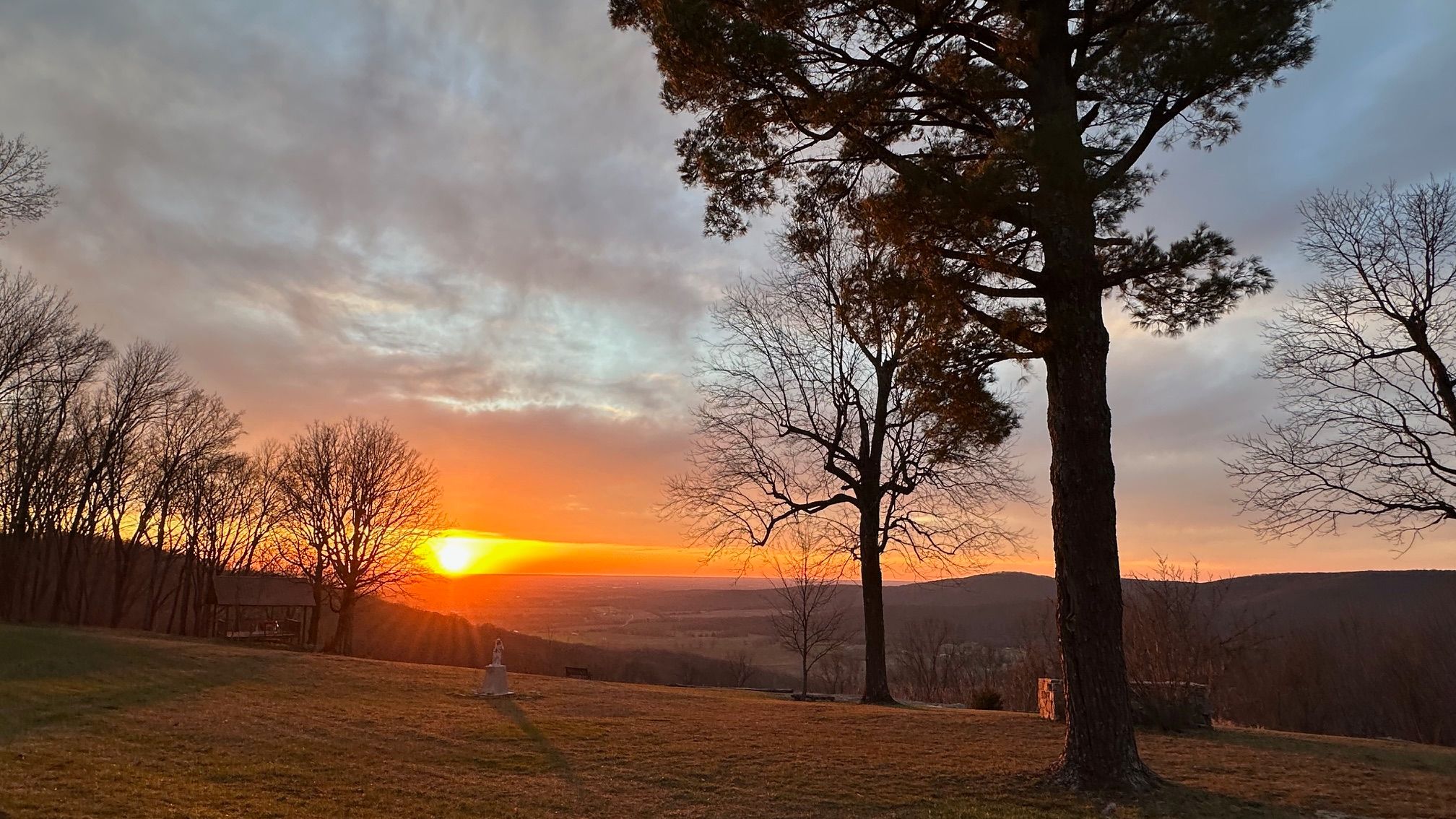
One reflection came from Everything Is Spiritual, where Bell writes that there is no separate word for “spiritual” in the Hebrew Scriptures because everything belongs within the life of God. Work, art, politics, relationships, grief, music, caring for the earth, caring for one another, all of it sacred. Bell reflects on Moses before the burning bush, reminding readers that the ground did not suddenly become holy when God spoke. The ground had always been holy. The transformation happened in Moses’ awareness.
Many people carry an unspoken belief that spiritual life happens somewhere else:
- after responsibilities are finished,
- after we become more disciplined,
- after we finally slow down,
- after we feel more certain or worthy.
But the invitation of contemplative practice is not to escape from ordinary life. It’s learning to become awake within it.
Centering Prayer quietly teaches this.
In silence, we begin noticing how often the mind races toward performance, fear, productivity, distraction, or control. We discover how difficult it can be simply to be present. Yet over time, contemplative prayer gently forms another posture within us, one rooted less in striving and more in attentiveness.
The opening reading Chuck shared from Resurrecting Jesus: Embodying the Spirit of a Revolutionary Mystic invited participants into deep self-reflection:
“Each of us must discover for ourselves what the Jesus story means. What does this story mean to you? What challenges does it present you with? What does it remind you of that you may have forgotten? What does it bring forth in you? What does it tell you that you need to pay attention to, to give yourself to, to pour yourself forth into? How does it reflect any ways that you may be holding back, holding on, letting fear dominate your life?”
“What does this story mean to you? What challenges does it present you with?”
The questions are not asking for perfect theological answers. They invite honesty. They ask us to notice where fear dominates, where we are holding back, and where life may be calling us toward greater openness.
Contemplation begins there: not in certainty, but in awareness.
This awareness changes how we move through the world. If all of life is permeated with divine presence, then spirituality is not confined to private prayer alone. It extends into:
- how we speak to others,
- how we care for creation,
- how we hold suffering,
- how we engage our communities,
- how we respond to injustice,
- how we love.
Even ordinary moments begin to shift. Washing dishes. Sitting with grief. Listening to a friend. Walking quietly outside. Preparing a meal. Answering emails. Waiting in uncertainty. The contemplative life teaches us that sacredness is often hidden within the everyday rhythms we overlook.
The contemplative path does not remove us from ordinary life. It returns us to it with gentler eyes, quieter hearts, and a deeper awareness that the holy has been present all along.
Chuck then ended Centering Prayer with this blessing: May our hearts be ever open to the gentle whisper of Spirit’s call within us. May every false boundary be broken down. May our minds be renewed each day in the newness that Spirit has for us, and may we always walk upon sacred ground.
Amen and Amen.
Stay Connected!
Updates and News sent directly to your inbox.
We hate SPAM. We will never sell your information, for any reason.
